On the road
Real captures from a phone, not mock-ups.
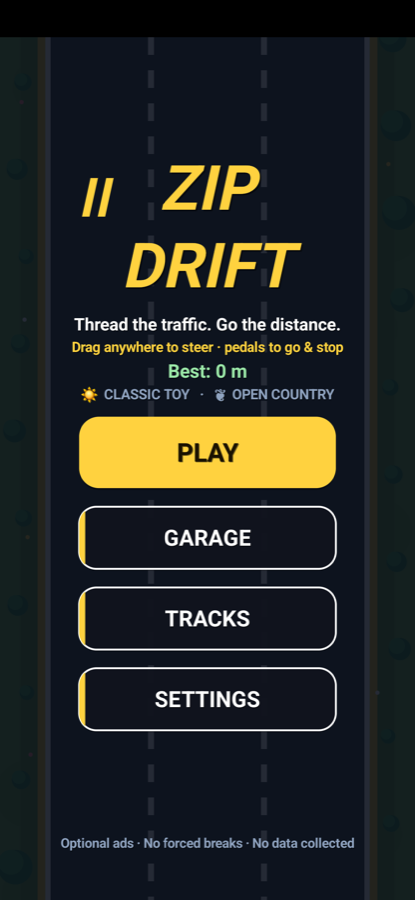
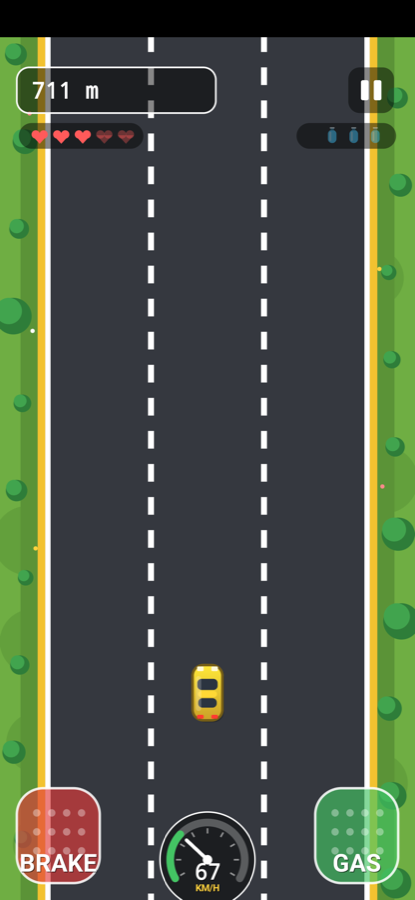
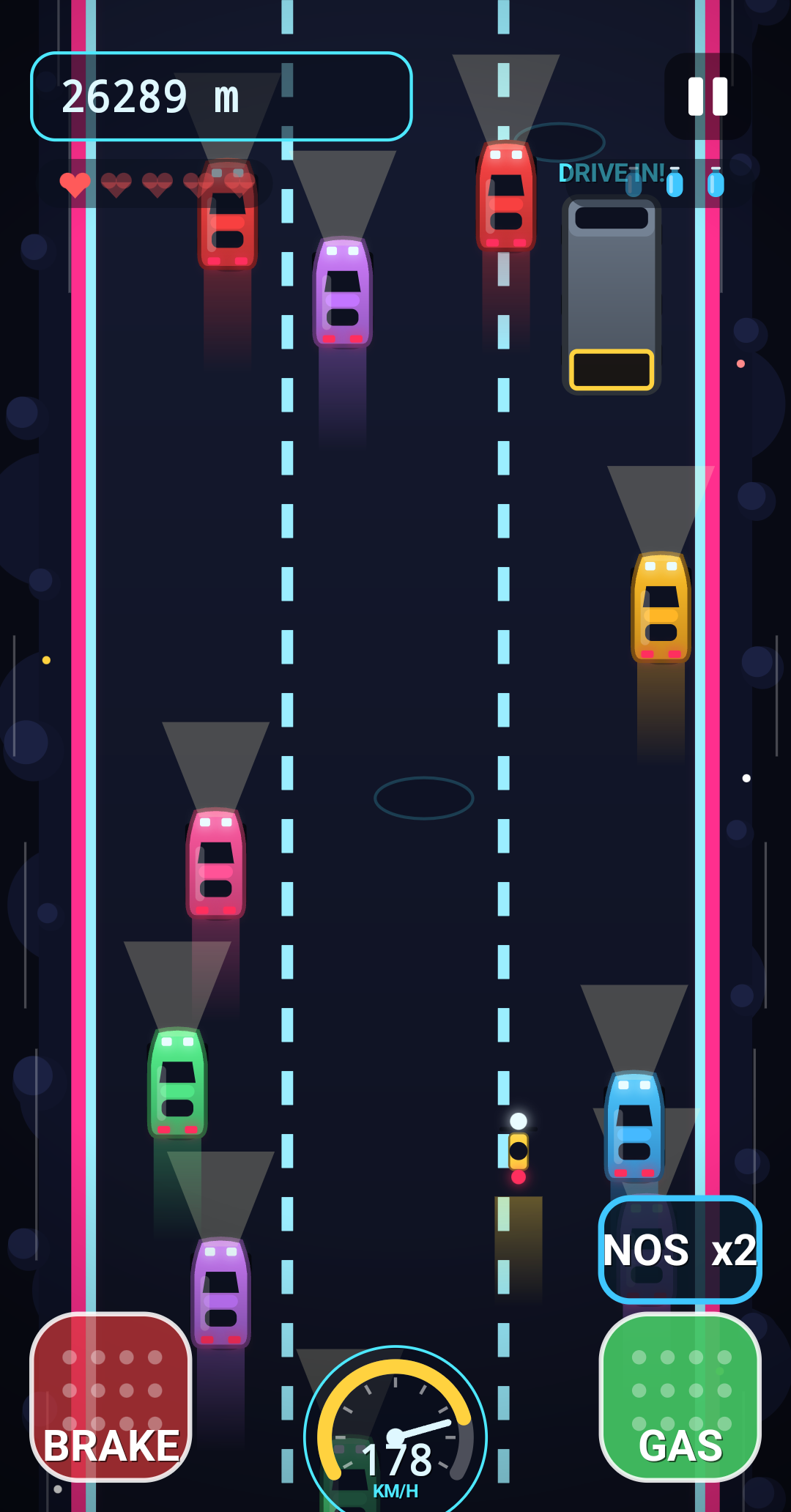
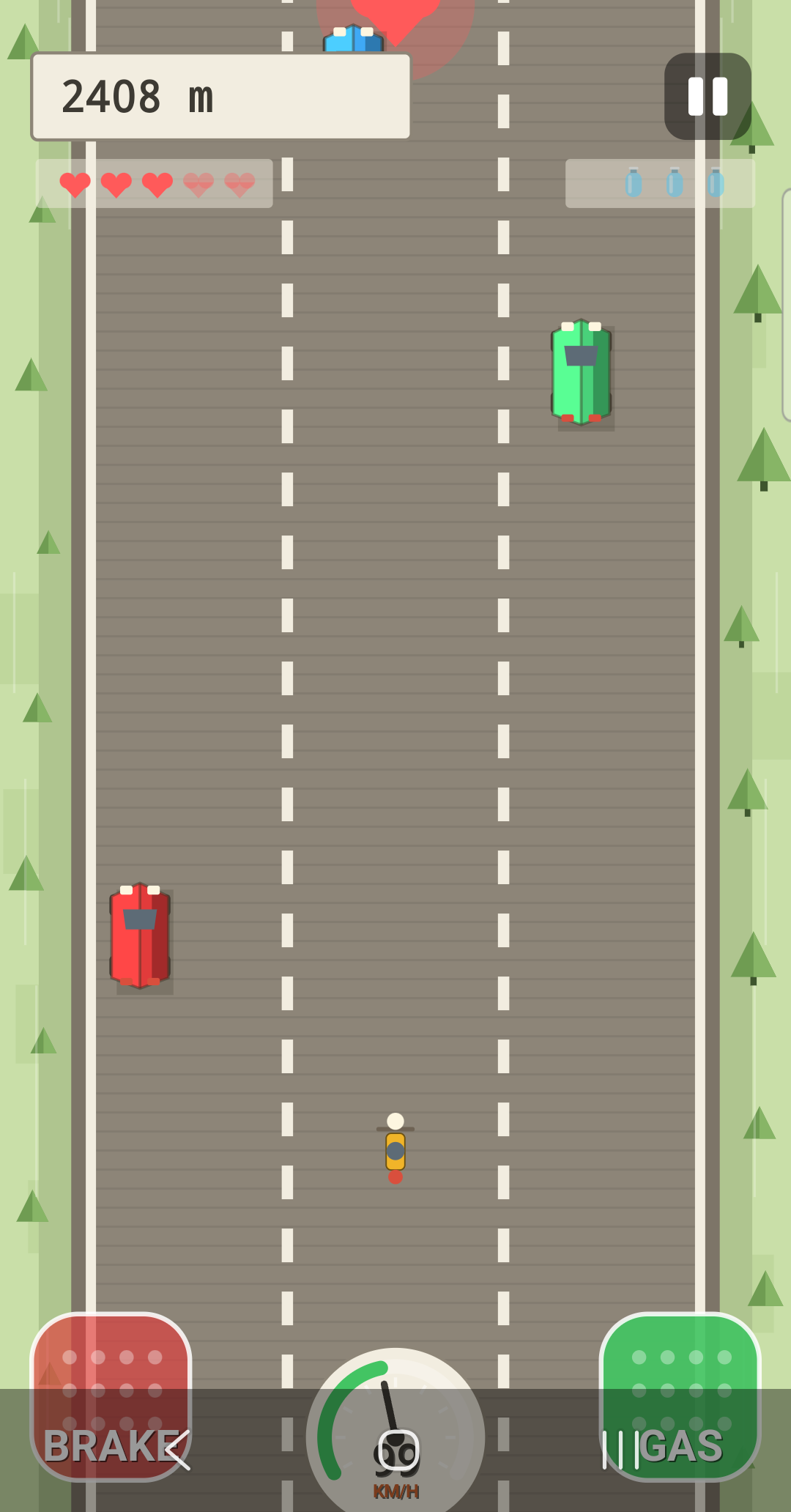
Traffic comes at you down three lanes. Drag anywhere to steer, or tilt the phone. Go further than last time. The depth is in how it escalates.
Cars spawn far enough ahead that you always get time to see and react, even as the road speeds up and fills. It gets harder by giving you less room — never by cheating.
Cars change lanes, sit off-centre, and lean on the horn when you cut one close. A few come after you deliberately — but always with a warning first.
Canisters give a five-second boost. You cover sixty percent more ground, and traffic still kills you. Spending it is a decision.
Real captures from a phone, not mock-ups.
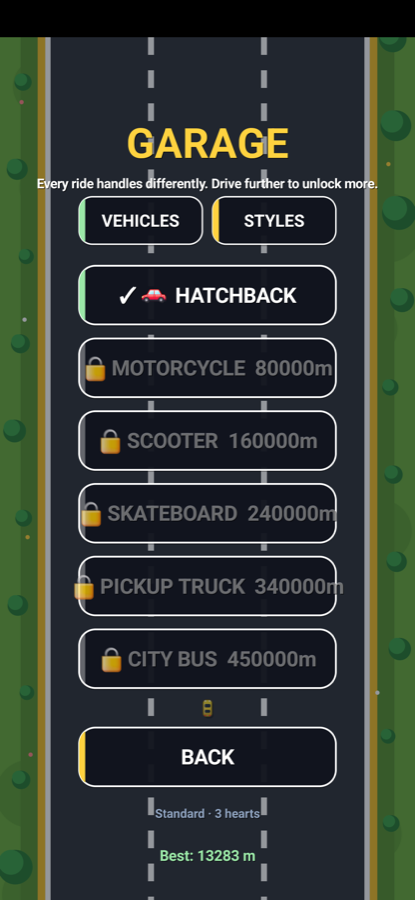
Every vehicle gives something up. Narrow ones slip through gaps a car can't take but have nothing spare; wide ones are a handful to place, so they start with extra hearts.
A style changes the whole scene — palette, car shape, how light falls, even the HUD. All of it is drawn live. There isn't a single image file in the game.
Low sun, long shadows, warm tarmac.
Bright, chunky, die-cast.
Wet streets and puddle reflections.
Folded card, torn edges, flat facets.
A tabletop model, extruded and lit.
A technical drawing you can drive.
These aren't marketing lines. They're constraints the game is built around.
ZipDrift is in testing and heading for Google Play. This page will link to it on release.